The Truth About Artificial Rockwork
What the Industry Hides About Fake Rock, Themed Environments, and Decorative Illusions
This is not a book about fake rock. It is a book about the distance between how things look and what they really are.
Available on Amazon · Paperback & KindleBuy the Paperback Kindle eBook
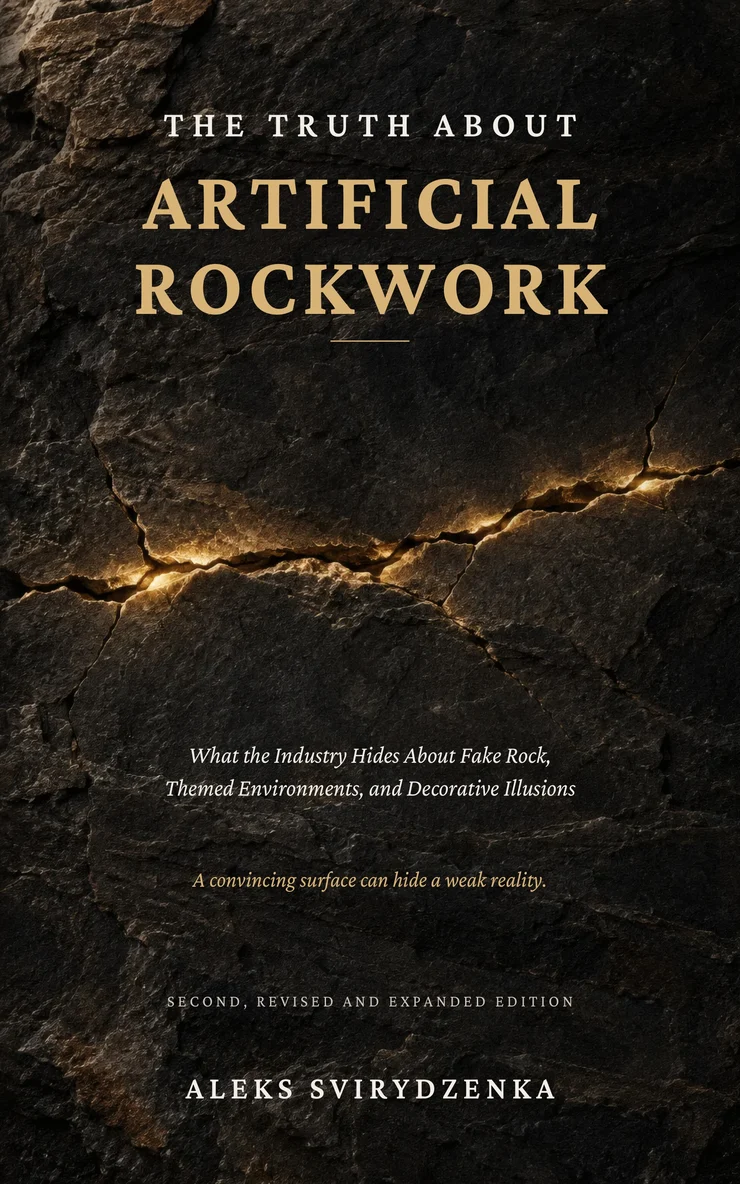
A convincing surface can hide a weak reality
Every industry hides its weaknesses behind language. Construction hides behind jargon, luxury behind prestige, hospitality behind lifestyle images, public projects behind official optimism. Decorative industries hide behind beauty.
Artificial rockwork — the stone of theme parks, zoos, water parks, resorts and city landmarks — makes that gap unusually visible. A structure can look like a mountain and behave like a stage set. A habitat can look wild and fail the animal that lives inside it. A low bid can look efficient while quietly scheduling the repairs of the next decade.
Aleks Svirydzenka has created themed environments since 2008. In this second, revised and expanded edition he uses one demanding craft as a lens on a whole industry — and on a pattern that reaches far beyond it: we buy packaging instead of substance, images instead of systems, opening day instead of the years that follow, confidence instead of competence.
What holds a place together is mostly invisible
Time reveals what was hidden
A place is judged not at the opening ceremony but after a hundred rains and a thousand washdowns.
What is hidden decides what is seen
Frames, water paths, anchors and the bond between layers decide whether beauty survives.
A habitat is for the animal
Visual naturalism is not welfare. Build for the life that lives there, not for the camera.
People will use what you build
They climb, sit, play and test every limit. Design for real people, not ideal ones.
Places sell feelings
Theme parks sell worlds, resorts sell escape, cities sell identity — and only honest work makes those feelings last.
Beautiful things should not need to lie
The simple conviction the book closes with.
Once you learn to recognize false quality in one industry, you begin to recognize it everywhere. Artificial rockwork is simply the lens.About the book
Written for the people who pay for, build and live with these places
This book is not written against anyone. It is written for everyone who wants the place to last — and for those who have ever sensed that something looked impressive but felt false, and wanted to know why.
Owners, operators and developers
How to read a portfolio, a rendering and a price; what to put in the brief; which questions reveal whether a team is ready — before you sign.
Zoo and aquarium professionals
Habitats designed around welfare: surfaces for paws, hooves and claws, coatings and air, organic load, geometry, choice and water.
Architects and designers
Why some rockwork feels true: geology, scale of texture, colour, light, ageing, context — and a brief that physics can actually deliver.
Engineers and builders
Frames, thin shells, anchors, water paths, corrosion, bond, curing, fire, quality control, handover and repairability.
Sculptors and craftsmen
The standard of the trade explained in plain words — mock-ups, testing, documentation and work that can be repaired without destroying it.
Procurement and public clients
Why price, cost and value are three different words — and how tenders can reward quality within existing rules.
Key ideas in the author's words
Thirty-seven chapters in eight parts
From the hidden engineering of frames, thin shells, water, corrosion and climate; through materials, testing, fire and handover; to habitats designed around animal welfare — including a new chapter on urine, food, droppings, pests and microbes; to people, children and public space; to realism, geology, scale, colour and light; and finally to value, memory, place and the choice of who builds.
IThe Truth Behind the SurfaceHow artificial rockwork should be understood, how the market sells appearance instead of substance, and why expensive mistakes begin long before construction starts.
- What Artificial Rockwork Really Is
- The Illusion Industry
- Images, Renderings and Portfolio Truth
- Price, Procurement and the Wrong Purchase
IIHidden EngineeringThe frame, the shell, the anchors, the water, the steel and the climate: what happens inside artificial rockwork, and why it decides the fate of the surface.
- The Hidden Frame and the Illusion of Mass
- When Mesh-and-Mortar Systems Go Wrong
- Anchors, Attachments and Dynamic Loads
- Water: The Primary Durability Driver
- Hidden Corrosion
- Delamination, Bond and Layer Separation
- Climate, Salts, UV and Movement
- Choosing the Right Structural-Material System
IIIMaterials, Execution & OwnershipWhat happens between the drawing and the opening day — and what decides whether an object can be owned, maintained and repaired for decades.
- Mixture Design, Shrinkage, Curing and Permeability
- Substrate Preparation, Bonding, Mock-Ups and Testing
- Services Hidden Inside the Rock
- Fire, Smoke and Indoor Themed Systems
- Brief, Schedule and Physics
- Quality Control, Handover, Documentation and Repairability
IVHabitat EngineeringWhere decorative mistakes become ethical mistakes: surfaces, chemistry, air, organic load, geometry, choice and water in environments built for animals.
- When a Beautiful Habitat Is Dangerous
- Surfaces: Grip, Abrasion, Claws, Hooves and Impact
- Coatings, Dust, Chemistry and Enclosed Air
- Living Chemistry: Urine, Food, Droppings, Pests and Microbes — new
- Geometry, Choice, Control and Behavior
- Wet and Aquatic Environments
VPeople & Public UseHuman behavior as a load case: climbing, sitting, crowds, children, vandalism and the reality of public space.
- People Will Use It Differently Than You Planned
- Children: When Decoration Becomes Play Equipment
- Vandalism, Graffiti and Public-Space Reality
VIRealism: Why Some Rockwork Feels TrueGeology, scale, color, light, context and originality: what separates a convincing rock from a prop.
- Why So Much Artificial Rockwork Looks Fake
- Geology and the Scale of Texture
- Color, Light, Shadow and Aging
- Context, Copying and Meaningful Originality
VIIValue, Place and ExperienceWhy atmosphere has economic consequences: theme parks, hotels, resorts, retail, cities, memory and the teams that create them.
- Theme Parks Sell Worlds, Not Rides
- Hospitality, Resorts and Luxury
- Retail, Cities and Landmarks
- Memory, Attachment, Design Value and Collaboration
VIIIThe New StandardHow smart clients choose, what strong contractors understand, and where the profession goes next.
- Choosing Contractors and Building Better Procurement
- The Future: From Building Surfaces to Building Value
- Epilogue — What This Book Tries to Change
- Appendix A — Questions Worth Asking, by project stage
- Appendix B — Glossary · Bibliography
Checked against published standards, professional guidance and peer-reviewed research, with chapter notes and a full bibliography.
Paperback · 6 × 9 in · ISBN 979-8-17-876037-6. German, Spanish, French, Italian, Polish and Portuguese editions are in preparation.
Aleks Svirydzenka
Aleks Svirydzenka is a sculptor, designer and artist, and the founder of Artisan Aleks Company in Poland. He chose his profession as a child and has stayed true to it. His education spans art, engineering, law and economics – but what matters most to him is one thing: creating.
Since 2008 he has designed and built artificial rock, sculptures, themed façades, caves and water features for leisure parks, zoos, hotels, restaurants and cities. He works where art meets engineering: on the scaffold, with shotcrete, steel and paint – and with clients who want to know why one illusion lasts for decades while another falls apart.
His aim is to create places that serve people and animals for years – not only impress on opening day.
Contact the AuthorDiscuss a Project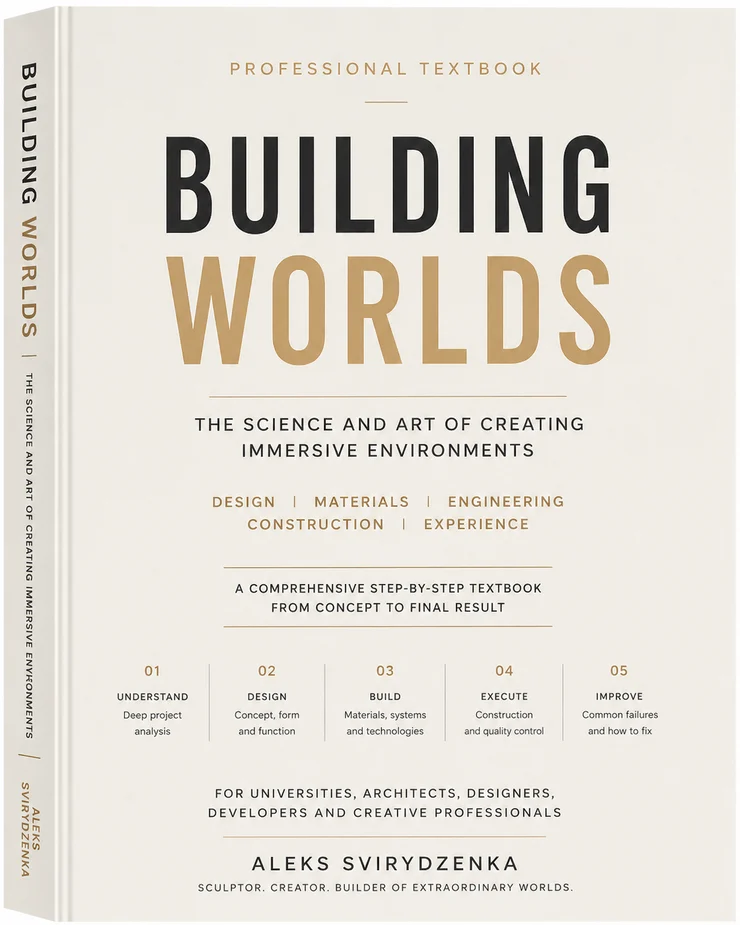
Building Worlds
A step-by-step professional textbook for universities, architects, designers and creators of immersive environments — from concept to final result.
Discover the book →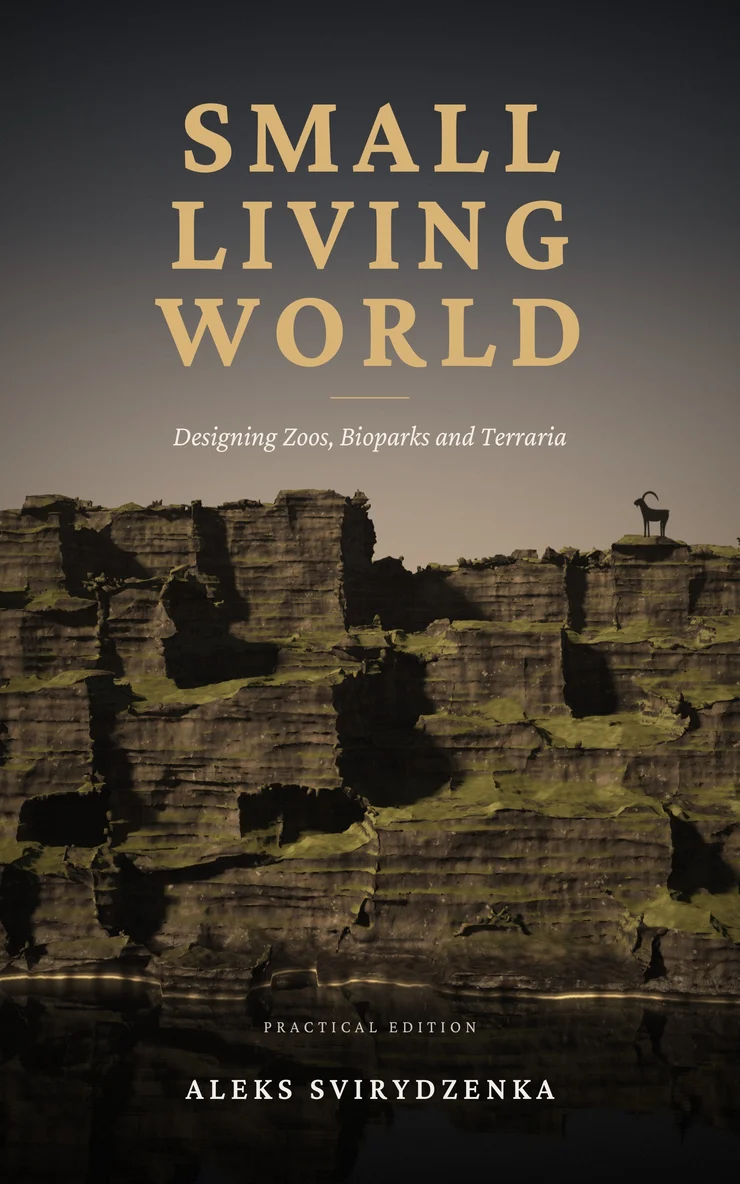
Small Living World
How to turn what science knows about an animal's life into real decisions: brief, budget, barrier, ground, water and the rock the animal lives on every day.
Discover the book →