Building Worlds
The Science and Art of Creating Immersive Environments
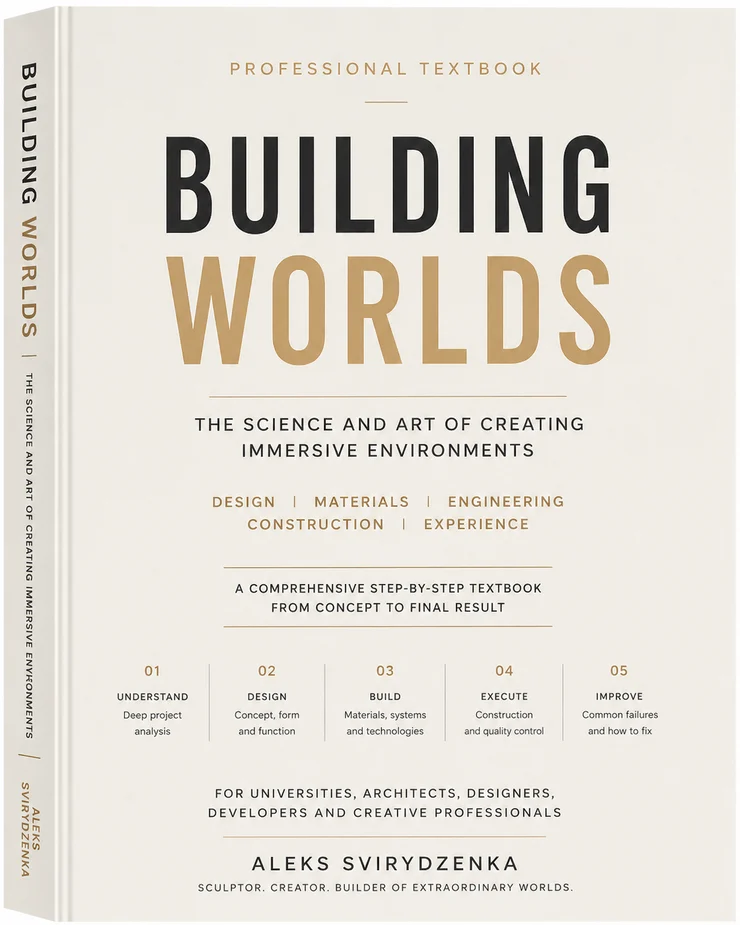
A comprehensive step-by-step textbook — from concept to final result — about the profession of creating worlds: places people visit, live in and remember, and environments built for living beings.
Educational textbook in developmentRegister Interest Discuss a Project
A profession that has no single textbook
The creator of immersive worlds works with five heads at once: an artist, an engineer, a biologist, a psychologist and a businessperson. The knowledge exists — in philosophy of place, environmental psychology, themed design, zoo science, materials engineering and business — but it is scattered across disciplines that rarely meet.
Building Worlds brings it together into one teachable discipline, written for universities, architects, designers and creators of immersive environments. Step by step: project thinking, design, materials, engineering, common mistakes and correct execution.
It grows from the author's book The Truth About Artificial Rockwork — but rockwork is only one example. The subject is the whole craft of making a world that is true, safe and moving.
The principles every chapter returns to
Truth versus illusion
An illusion is honest when it serves the experience and does not lie about safety, structure or the nature of living things.
The object lives in time
A world is judged after one, three, five and ten years — not on opening day.
Build for the living, not for the camera
For the animal, the child and the real person who will use it.
The product is emotion, meaning and memory
Concrete is only the medium. What people take home is the feeling of a place.
Illusion is honest when it serves the experience — and does not lie about safety, structure or the nature of the living.Building Worlds · the first law
Five parts, from first idea to the life of a world
The introduction traces the lineage of the profession — the gardens of Suzhou and Kyoto, Renaissance grottoes, the English landscape park, Coade stone and Pulhamite, the Buttes-Chaumont, Hagenbeck's barless panoramas, Disneyland's Matterhorn, Animal Kingdom, and today's immersive art spaces.
01UnderstandPlace, person, animal, time.
- What a place is: space and place, spirit of place, atmosphere
- Truth and illusion: the ethics of an honest illusion
- How people recognise nature — and why they notice a fake
- Emotion, awe and memory
- The body and the five senses
- The real person: public life, climbing, children, crowds, accessibility
- The animal as the main client: welfare, choice and control
- The world in time: weather as co-author, patina, the value of age
- The experience economy and the cost of ownership
02DesignDesigning a world.
- The brief: what we really need
- The big idea and story in space
- Route, map and rhythm
- Geology for the artist
- Form and scale
- The colour of stone
- Light and shadow
- Stone in world traditions
- Designing for animals
- Designing for people
- Water and plants
- Testing before building: models, VR, trial panels
03BuildMaterials and systems.
- How forms stand: mechanics for the artist
- Cementitious materials from the inside
- Choosing a system — and when not to use it
- Frame, steel, anchors and fixing to buildings
- Water inside and around
- Organic load: what living things do to materials, and materials to living things
- Climate: frost, heat, salts, UV
- The rock as a machine: light, fog, sound, service routes, fire
- Carbon and sustainability
04ExecuteConstruction and quality control.
- The project process: who signs what
- The team and the alliance
- Workshop and site
- Sculpture and texture: scan → model → milling → the hand
- Painting stone
- Quality: references, hold points, test panels
- Contract, tender, authorship and the price of creative work
05ImproveThe life of a world after opening.
- Handover and digital memory
- Maintenance and repair: care instead of restoration
- Defects and diagnosis
- Evaluation after opening at 1, 3 and 5 years — people and animals
- The ethics of the profession
- The future of the profession and open questions
Appendices planned: glossary, checklists (brief, real-person use, organic load, acceptance, handover), species sheets for 12 animal groups, rock-type and structural-system tables, standards by jurisdiction, a timeline of the profession. Contents may change as the textbook develops.
For those who will build the next worlds
Universities and students
A structured course in five parts that connects art, science and engineering into one profession.
Architects and landscape architects
Story in space, route and rhythm, geology, scale, light — and the physics behind the dream.
Themed designers and art directors
How to make a world feel true at every distance, and keep it true for years.
Engineers and contractors
Systems, frames, water, climate and quality control explained for people who build with artists.
Zoo and habitat designers
Designing for the animal as the main client: welfare, choice, surfaces, warmth and water.
Developers and operators
The experience economy, cost of ownership and why an honest world pays back longer.

Aleks Svirydzenka
Aleks Svirydzenka is a sculptor, designer and artist, and the founder of Artisan Aleks Company in Poland. He chose his profession as a child and has stayed true to it. His education spans art, engineering, law and economics – but what matters most to him is one thing: creating.
Since 2008 he has designed and built artificial rock, sculptures, themed façades, caves and water features for leisure parks, zoos, hotels, restaurants and cities. He works where art meets engineering: on the scaffold, with shotcrete, steel and paint – and with clients who want to know why one illusion lasts for decades while another falls apart.
His aim is to create places that serve people and animals for years – not only impress on opening day.
Contact the AuthorDiscuss a Project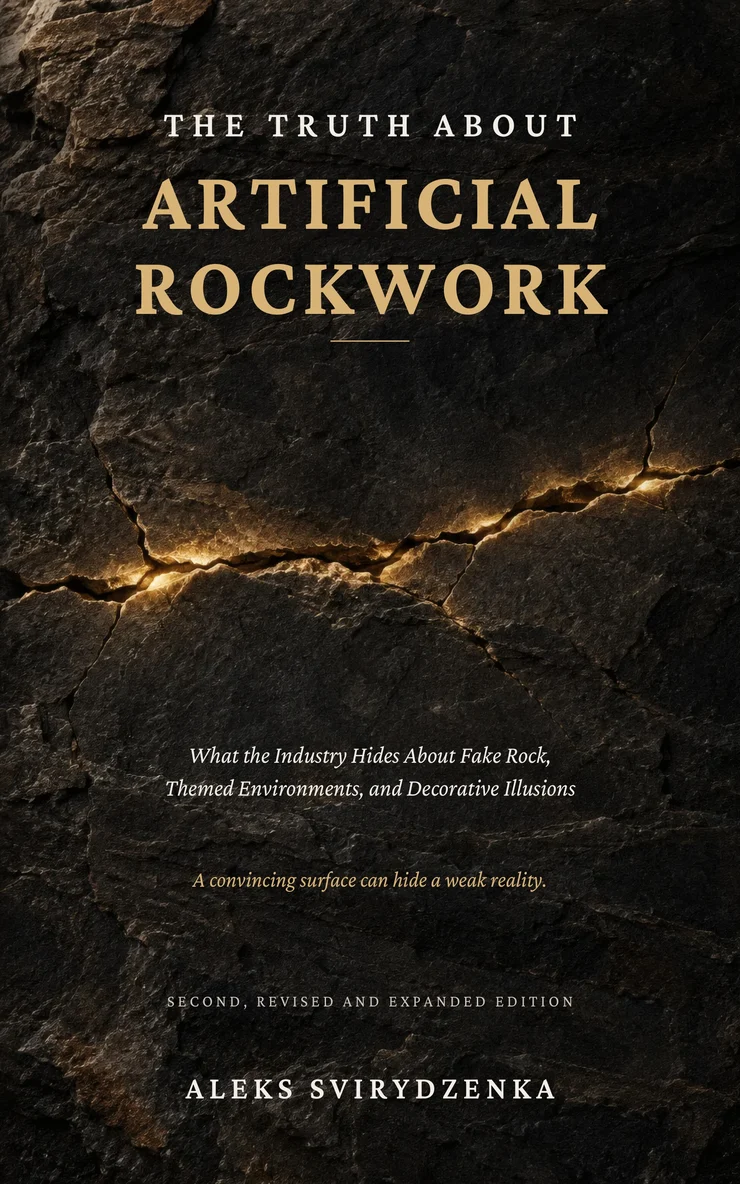
The Truth About Artificial Rockwork
Not a book about fake rock, but about the distance between how things look and what they really are. Second, revised and expanded edition.
Discover the book →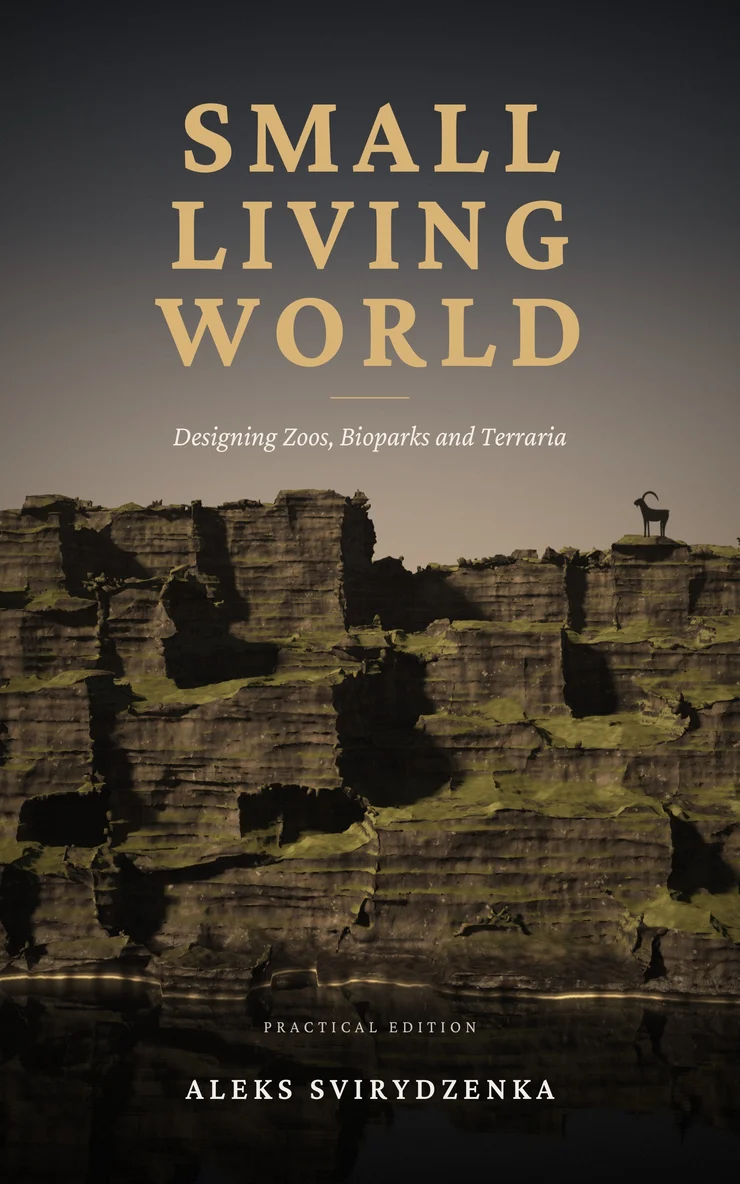
Small Living World
How to turn what science knows about an animal's life into real decisions: brief, budget, barrier, ground, water and the rock the animal lives on every day.
Discover the book →